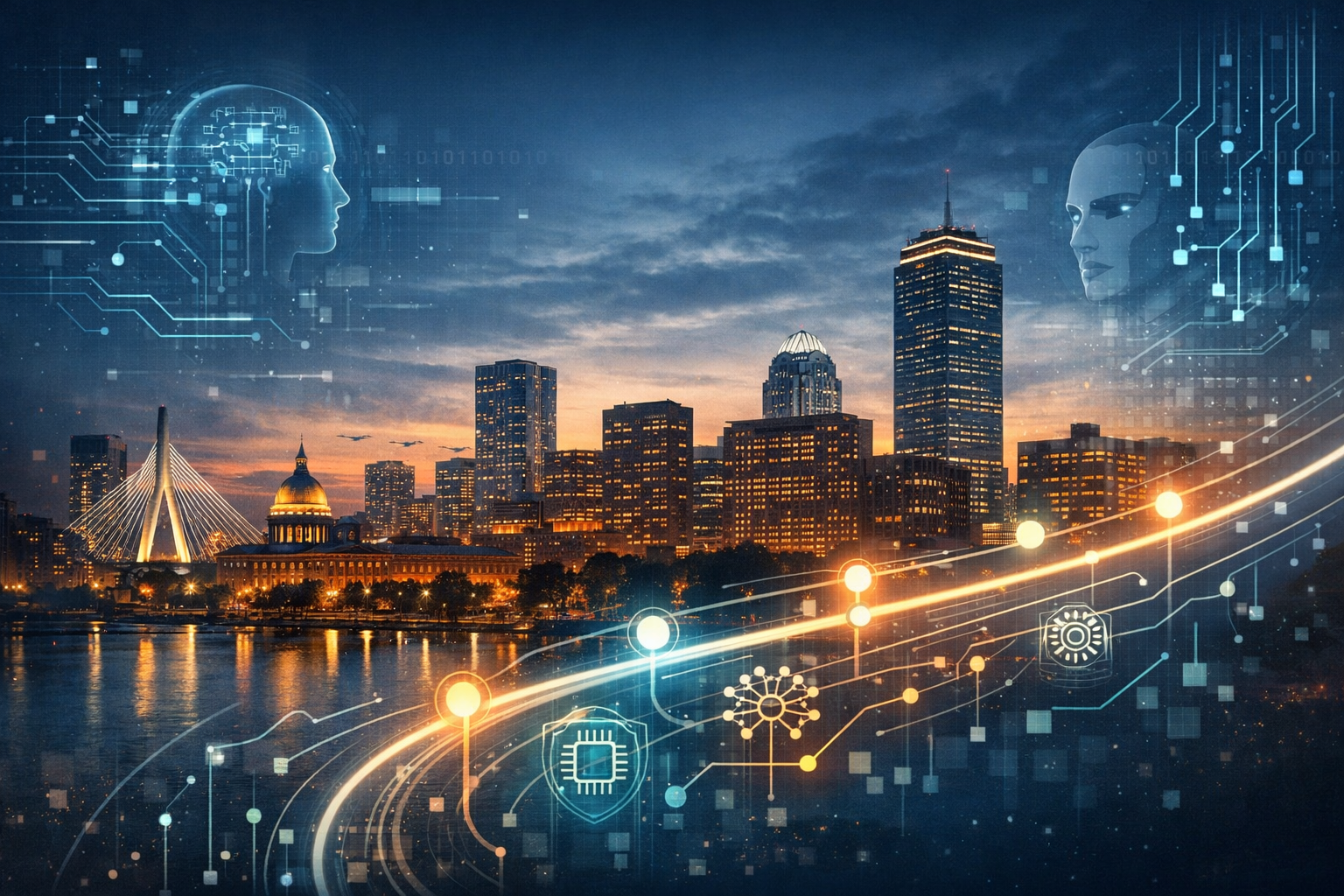
Tag: Boston

Boston related posts

  • The Complete Timeline of AI: 1950–2030

    The Complete Timeline of AI: 1950–2030

    The Complete Timeline of AI: 1950–2030

    TL;DR
    From Alan Turing’s theoretical foundations to today’s generative models and quantum experiments, artificial intelligence has evolved dramatically over 80 years. This timeline explores the milestones that shaped AI, the setbacks that nearly killed it, and the breakthroughs poised to transform life by 2030.

    Introduction
    Artificial intelligence (AI) is not a sudden discovery but the culmination of decades of research, vision, and engineering. The term “artificial intelligence” was coined in the 1950s, yet its roots extend back to philosophical musings about thinking machines and early work in logic. Understanding the history of AI is essential for grasping its current capabilities and anticipating its future trajectories. In this article, we explore how AI has grown from conceptual thought experiments to ubiquitous tools that power everything from voice assistants to medical diagnostics. The Early Foundations (1950s–1960s)
    Turing’s Vision
    In 1950, British mathematician Alan Turing published “Computing Machinery and Intelligence,” proposing the now-famous Turing Test as a way to measure machine intelligence

    Turing’s question—*Can machines think?*—sparked imaginations across academia. During this era, MIT’s early computing labs and pioneers such as Marvin Minsky and John McCarthy established the conceptual basis for AI. McCarthy coined the term “artificial intelligence” in 1956 during the Dartmouth Conference, which marked AI’s official birth as a research field. Early programs like the Logic Theorist and ELIZA demonstrated that computers could mimic aspects of human reasoning and conversation.

    The Rise of Symbolic AI
    Research in the 1960s focused on symbolic AI—rule-based systems that manipulated symbols to mimic human problem-solving. Joseph Weizenbaum’s ELIZA program at MIT showed how simple pattern-matching could imitate psychotherapy sessions. Expert systems like DENDRAL (for chemical analysis) and SHRDLU (for manipulating blocks) hinted at AI’s commercial potential. However, progress was limited by hardware constraints and the complexity of encoding common sense knowledge in rules.

    The Dawn of Machine Learning (1970s–1980s)
    Expert Systems and Optimism
    The 1970s saw the emergence of expert systems, software that captured specialist knowledge in domains such as medicine and geology. Systems like MYCIN diagnosed blood infections by following a library of rules. These successes fueled hype and investment, with many believing that AI would soon rival human expertise.

    Neural Networks Reborn
    At the same time, a parallel line of research explored neural networks. Inspired by the human brain, neural networks learn patterns through weighted connections rather than explicit rules. While early perceptrons were limited, the discovery of backpropagation in the 1980s allowed multilayer networks to learn complex functions. Neural networks briefly fell out of favor due to limited processing power and data, but they planted seeds for later breakthroughs.

    AI Winters and Resurgence (1980s–1990s)
    The field experienced two major **AI winters** when funding and interest dried up due to unmet expectations. In the late 1980s, limitations of expert systems and slow progress dampened enthusiasm. Yet researchers persisted: developments in probabilistic reasoning, such as Bayesian networks, offered a more flexible framework for handling uncertainty. Reinforcement learning emerged, allowing agents to learn from trial and error.

    The 1990s brought renewed interest thanks to better algorithms and hardware. IBM’s Deep Blue famously defeated world chess champion Garry Kasparov in 1997, showcasing the power of specialized AI systems. The internet boom generated unprecedented data, laying the groundwork for data-driven learning.

    The Big Data Revolution (2000s)
    Data and Compute Fuel Progress
    With the advent of cloud computing and enormous datasets, AI shifted from rule-based to data-driven approaches. Companies like Google and Amazon harnessed machine learning for search ranking, recommendation engines, and logistics. Algorithms such as Support Vector Machines and Random Forests became standard tools.

    Rise of Open-Source Frameworks
    The 2000s also saw the proliferation of open-source libraries—Weka, scikit-learn, and later TensorFlow and PyTorch—that democratized AI experimentation. Researchers worldwide could build on shared tools and datasets, accelerating innovation. Universities and labs introduced Massive Open Online Courses (MOOCs), bringing AI and machine learning education to millions.

    Deep Learning Breakthroughs (2010s)
    Convolutional and Recurrent Networks
    Around 2012, deep learning ignited an AI renaissance. Convolutional Neural Networks (CNNs) like AlexNet revolutionized computer vision by dramatically improving accuracy on image recognition tasks. Recurrent Neural Networks (RNNs) and their variants, such as Long Short-Term Memory (LSTM) networks, excelled at processing sequential data in speech and language.

    Explosion of Applications
    Deep learning drove rapid advancements across domains: self-driving cars learned to perceive their environment; voice assistants like Siri and Alexa became mainstream; translation and speech synthesis reached near-human quality. Generative models, including Generative Adversarial Networks (GANs) and Transformers, enabled machines to create realistic images, music, and text.

    AI Today: Ubiquitous Intelligence (2020s)
    Generative AI and Foundation Models
    The early 2020s witnessed the rise of foundation models—large-scale neural networks pretrained on diverse data that can be fine-tuned for specific tasks. Models like ChatGPT, DALL·E, and Stable Diffusion demonstrate that AI can generate coherent stories, compelling art, and even computer code. Robotics companies such as Boston Dynamics showcase autonomous robots walking, jumping, and dancing.

    Ethical and Societal Implications
    With AI woven into everyday life, ethical considerations have become paramount. Questions about bias, privacy, and transparency dominate policy discussions. Boston-area labs are among those leading research on responsible AI. Governments and organizations worldwide are establishing AI principles and regulatory frameworks to ensure fair and beneficial outcomes.

    The Road to 2030
    Quantum and Neuromorphic Computing
    Looking ahead, quantum computing promises to solve problems beyond the reach of classical computers, potentially enabling breakthroughs in cryptography, material science, and machine learning. MIT researchers are already exploring the intersection of quantum and AI. Neuromorphic chips, which mimic the brain’s architecture, may deliver energy-efficient AI on devices from smartphones to autonomous drones.

    Human–AI Collaboration
    Experts anticipate a shift from AI as a tool to AI as a collaborator. Doctors will work alongside diagnostic systems that suggest treatment plans; engineers will co-create designs with generative models; educators will partner with adaptive tutoring systems. Preparing the workforce to interact effectively with AI will be as important as the technologies themselves.

    Governance and Global Impact
    By 2030, AI could contribute trillions of dollars to the global economy. Ensuring that its benefits are equitably distributed and that risks are mitigated will require coordinated global governance. Initiatives like the OECD’s AI principles and UNESCO’s ethical guidelines are early steps toward a more comprehensive framework.

    Conclusion
    Artificial intelligence has traveled a long path from theoretical musings to transformative technology. Its journey has been characterized by cycles of hype and disappointment, breakthroughs and setbacks. Today, AI is embedded in every industry and reaching the edges of human creativity. Understanding this history provides perspective on where we are headed: a future where AI augments human capabilities, addresses complex challenges, and provokes new ethical questions. The next chapter—leading up to 2030—will be defined by how we harness AI’s power responsibly and creatively.

    See related articles on AI Winter: Lessons from the Past and How MIT Shaped Quantum Computing on BeantownBot.

  • How Boston Startups Are Using AI to Disrupt Healthcare

    How Boston Startups Are Using AI to Disrupt Healthcare

    Boston’s AI Healthcare Ecosystem

    Boston has long been a breeding ground for innovation. Home to leading hospitals, research universities and a dense network of biotech and venture capital firms, the city’s healthcare startups are now leaning into artificial intelligence. The Massachusetts AI Hub—launched by the state in 2024—is investing in high‑performance computing infrastructure to support research and startups. The Hub’s partnership with the Massachusetts Green High Performance Computing Center will provide sustainable infrastructure valued at more than $100 million over five years. Governor Maura Healey noted that the initiative is designed to “support research, attract talent and solve problems” across sectors, laying the foundation for a wave of AI‑driven healthcare innovations.

    AI‑Powered Pathology: PathAI

    One of Boston’s most visible AI healthcare startups is PathAI. Based in Boston, PathAI develops AI‑powered research tools and services for pathology and collaborates with pharmaceutical companies and hospitals to improve diagnostic accuracy. Its platform uses machine‑learning models to analyze digital pathology slides, offering more precise insights into diseases like cancer. A 2022 news release from the Cleveland Clinic describes how the hospital partnered with PathAI to build a digital pathology infrastructure that will leverage the company’s algorithms in both research and clinical care. By digitizing hundreds of thousands of pathology specimens, the collaboration aims to speed up diagnosis and advance precision medicine.

    The promise of AI in pathology goes beyond efficiency. PathAI’s models can flag subtle patterns in tissue samples that human pathologists might miss, helping doctors tailor treatments and reduce diagnostic errors. As part of Boston’s innovation ecosystem, the company benefits from proximity to academic medical centers and the new AI Hub, which offers access to sustainable computing power for model training and validation.

    Personalized Care and Digital Therapeutics: Biofourmis

    Another Boston‑based player, Biofourmis, focuses on remote care and digital therapeutics. Built In Boston notes that Biofourmis is “pioneering an entirely new category of medicine” by developing clinically validated software‑based therapeutics. Its flagship platform, Biovitals®, uses personalized AI analytics to predict clinical exacerbations before they occur, helping clinicians intervene early. Biofourmis’s AI tools monitor patients with chronic conditions such as heart failure and cancer, analyze biometrics from wearable devices, and alert care teams when a patient’s metrics deviate from baseline. The company’s headquarters in Boston puts it in the heart of a dense clinical network and offers access to investors and regulatory expertise. According to Built In, Biofourmis’s platform predicts critical health events across multiple therapeutic areas and provides cost‑effective solutions for payers.

    AI Triage and Symptom Checkers

    AI is also changing how patients engage with the healthcare system. Symptom‑checker platforms like Buoy Health use natural language processing to assess symptoms and provide personalized guidance. The University of St. Augustine for Health Sciences writes that Buoy Health’s web‑based assistant asks patients about their symptoms and then advises them on next steps. During the COVID‑19 pandemic the tool offered personalized recommendations based on CDC guidance. By triaging cases online, Buoy Health reduces unnecessary emergency‑room visits and helps patients decide when to seek care. Though not all symptom checkers are equal, they illustrate how Boston’s startups are pushing AI beyond the clinic and into patients’ daily lives.

    Academic and Government Support

    Boston’s AI healthcare boom is fueled by academia and government. Universities like MIT and Harvard produce cutting‑edge research in machine learning and biomedical engineering. The Massachusetts AI Hub’s recent grant—$31 million to expand sustainable high‑performance computing and hire the Hub’s first director—reinforces the state’s commitment to AI advancement. The Hub works with institutions including MIT, Harvard, Northeastern, UMass and Yale, drawing on their expertise to tackle challenges ranging from climate to healthcare. This infusion of funding and collaboration ensures that startups have access to technical infrastructure, mentoring and a pipeline of skilled graduates.

    Challenges: Data, Energy and Ethics

    Despite rapid progress, AI healthcare companies must navigate serious challenges. Data privacy and security are paramount when dealing with sensitive medical records. AI models require large datasets to train effectively and must comply with strict regulations like HIPAA. Energy consumption is another concern: Boston University professor Ayse Coskun notes that asking an AI system a question uses roughly ten times the electricity of a traditional search. Data centers already consume about 4 percent of U.S. electricity and their demand is projected to more than double by 2028. To address this, researchers advocate for energy‑flexible data centers that can reduce power usage during peak demand. Massachusetts’s AI Hub recognizes this challenge and prioritizes sustainable computing, aligning environmental goals with technological progress.

    The Road Ahead: Boston’s Health‑Tech Future

    Boston’s AI healthcare startups are part of a global wave of digital medicine. As models become more powerful, they will enable earlier disease detection, more personalized treatments and fully remote care. However, success depends on responsible deployment—addressing bias, protecting patient data and ensuring equitable access. Boston’s combination of academic excellence, state support and entrepreneurial energy positions the city to lead this transformation.

    TL;DR

    Boston’s AI healthcare ecosystem is thriving thanks to a confluence of world-class hospitals, research universities and state investment. Startups like PathAI and Biofourmis are using AI to improve diagnostics and deliver personalized care, while symptom-checker tools like Buoy Health help triage patients based on CDC guidance. The Massachusetts AI Hub is investing over $100 million in sustainable high-performance computing and partnerships to accelerate research and startup innovation. Although AI promises transformative improvements, experts warn about data privacy, energy consumption and ethical challenges. Boston’s collaborative ecosystem positions the city at the cutting edge of health-tech innovation, but long-term success depends on responsible AI deployment and equitable access.

    FAQ

    • What does PathAI do? PathAI develops AI‑powered research tools for pathology. Its machine‑learning algorithms analyze digital slides to improve diagnostic accuracy, and the company is based in Boston.
    • How does Biofourmis use AI? Biofourmis’s Biovitals® platform collects patient data from wearable devices and uses personalized AI analytics to predict health events before they become crises.
    • Are AI symptom checkers reliable? Symptom checkers like Buoy Health can provide personalized guidance and reduce unnecessary hospital visits. The University of St. Augustine notes that Buoy’s assistant triages patients using up‑to‑date CDC guidance. However, users should still consult healthcare professionals for serious concerns.
    • Why is Boston a hub for AI healthcare? Boston combines world‑class hospitals and universities with strong state support. The Massachusetts AI Hub invests in sustainable computing and research infrastructure, attracting startups and talent from around the world.

    For more on Boston’s tech history and AI innovations, check out our previous articles:
    MIT’s AI legacy,
    Massachusetts’ forgotten inventors and
    Boston Dynamics’ robots. If you’re new to AI development, see our beginner’s chatbot guide.

    Affiliate Disclosure: Some sections mention medical devices and digital therapeutics. For readers interested in exploring AI‑powered medical devices, we recommend the AI Medical Devices Book. As an Amazon Associate, BeantownBot may earn commissions from qualifying purchases.